

Eating for Your Body: Simple Meals and Snacks


When You Know Whole Foods Matter but Do Not Know Where to Start
A lot of people say they want to eat better.
What they often mean is they want to eat better without feeling overwhelmed, judged, or exhausted.
Cooking can feel intimidating, especially if:
You were never taught
You live with chronic pain
You are exhausted from illness or treatment
You are managing medications and side effects
Standing for long periods hurts
You do not have the energy to plan meals
I understand this personally.
During cancer treatment, cooking full meals was often unrealistic. My energy was limited. My appetite came and went. Smells bothered me. Standing for long periods hurt.
What I needed was food that was nearby, simple, and nourishing.
This post is part of the Eating for Your Body series. It is about making simple meals and snacks support your body without requiring cooking skills, perfection, or extra energy.
You Do Not Have to Be a “Cook” to Eat Well
One of the biggest myths around eating whole foods is that you need to know how to cook.
You do not.
Eating for your body is about assembling, not mastering recipes.
You are allowed to:
Use pre cut vegetables
Use frozen foods
Use simple ingredients
Repeat the same meals
Snack instead of eating full meals
Feeding yourself counts, even when it is not fancy.
The Reality of Eating During Illness and Treatment
When I was going through chemo, full meals were often too much. My body tolerated small amounts better than large portions.
One of my favorite snacks was something I could keep right by my chair.
I mixed:
Mixed nuts
Dark chocolate
Raisins or craisins
Sometimes Cheerios or another vitamin enriched cereal
It was not glamorous.
It was practical.
That snack:
Gave me calories
Provided fats and protein
Included minerals and antioxidants
Was easy to grab
Allowed me to eat without pressure
I could pick at it throughout the day when eating felt hard.
That snack supported me more than forcing “proper meals” ever could have.
Snacking Is Not Failure
Snacking has a bad reputation, but for many people, it is survival.
Snacking can:
Support blood sugar
Prevent nausea
Reduce fatigue
Make eating manageable
Reduce stress around food
Eating smaller amounts more often is a valid way to nourish your body.
Especially when appetite is unpredictable, snacks matter.
Simple Meals and Snack Ideas That Support the Body
Here are examples of no or low cooking snacks that support health:
Nuts and seeds
Nut butter with crackers or fruit
Yogurt with fruit
Cheese with whole grain crackers
Hard boiled eggs
Trail mix with nuts and a little dark chocolate
Hummus with vegetables or pita
Cottage cheese with fruit
Oatmeal with added nuts or seeds
Cereal with milk or plant based milk
These are not diet foods.
They are support foods.
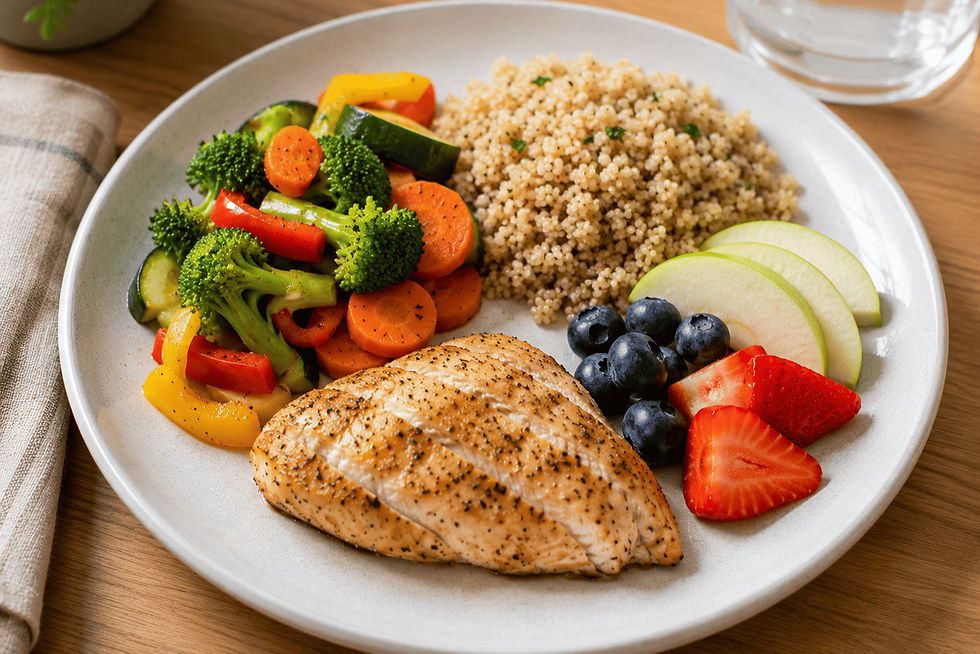
Building Simple Meals Without Cooking Skills
Think in three parts, not recipes:
Protein
Produce
Carbohydrate or healthy fat
Examples:
Rotisserie chicken, bagged salad, rice
Eggs, toast, fruit
Frozen vegetables, canned beans, olive oil
Soup with added protein
Salad with protein and healthy fats
You can mix and match based on what you tolerate.
Frozen and Pre Prepared Foods Are Tools
Frozen vegetables are not a failure. Pre cut fruit is not cheating.
These foods:
Save energy
Reduce prep time
Reduce pain from standing
Reduce food waste
For someone managing chronic illness or recovery, these tools are supportive.
Using them wisely is part of eating for your body.
Sitting While You Prepare Food Is Allowed
Cooking does not have to happen standing up.
I have learned to:
Sit while chopping
Use stools
Take breaks
Prep small amounts
Food does not care how it gets made. Your body does.
Repeating Meals Is Okay
You do not need variety every day.
Repeating meals:
Reduces decision fatigue
Makes shopping easier
Reduces stress
Helps your body know what to expect
During chemo, repetition helped me feel more stable.
I did not need surprises.
I needed consistency.
Eating Something Is Better Than Eating Nothing
This matters.
On hard days, the goal is not perfection.
The goal is nourishment.
If all you can manage is a snack, that is okay.
If all you can manage is cereal, that counts.
If all you can manage is soup, that supports you.
Eating something helps your body cope.
Simple Does Not Mean Less Valuable
Simple food still:
Supports bloodwork
Provides nutrients
Helps medication tolerance
Supports energy
Reduces stress
I am still using these strategies today.
Even years after treatment, there are days when simple food is the right choice.
Tracking What Works for You
Everyone tolerates food differently.
Tracking things like:
What foods feel good
What foods cause discomfort
How snacks affect energy
How often you eat
Helps you build your own support system.
This is why we created the Ultimate Health Tracker. It allows people to notice what works without judgment.
You Are Allowed to Eat the Way Your Body Needs
You do not have to earn food by cooking.
You do not have to prove discipline.
You do not have to impress anyone.
You need food that supports the body you are in today.
What Comes Next
Next in the Eating for Your Body series, we can explore:
Eating for Your Body: Grocery Shopping Made Simple When Energy Is Low
This will help people take everything we have covered and apply it in the store without overwhelm.
You Are Doing Enough
If cooking feels hard, you are not failing. If eating feels complicated, you are not broken. If snacks are how you get through the day, that is valid.
Support matters.
Where to Go From Here
Simple meals still count, especially on the days when cooking feels hard. At Surviving Life Lessons, we believe in life survivors helping life strugglers. Our Healthy Eating & Nutrition Support Group is a place to share easy meal and snack ideas, and our Chronic Illness & Chronic Pain Support Group understands when illness or fatigue makes food harder. You can also browse our Community Groups Catalog to find every group that fits where you are right now.
For more ideas, read Eating for Your Body: Grocery Shopping When Energy Is Low and Eating for Your Body: Family Meals and Food Balance, and use The Health and Fitness Journey Journal to track what works for you.
Your Story Matters
We need your nice comments below! Your thoughts, experiences, and lessons learned might be exactly what someone else needs to hear today.
Drop a comment, Say Hello, and join the conversation.
Need More Personalized Support?
Everyone's journey is unique. If you're looking for personalized guidance, encouragement, or one-on-one support, explore our services to find the option that's right for you. We're here to help you take your next step with confidence and hope.
Helpful Resources for Your Journey
Explore our collection of books, journals, coloring books, and printable PDFs designed to encourage, inspire, and support you every step of the way.
References
American Cancer Society. Nutrition During Cancer Treatment. cancer.org
Mayo Clinic Staff. Easy Nutrition Tips for Low Appetite. mayoclinic.org
Cleveland Clinic. Healthy Snacking. clevelandclinic.org
Harvard T.H. Chan School of Public Health. Healthy Eating Plate. hsph.harvard.edu
About the Author:
Deborah Ann Martin is the founder of Surviving Life Lessons, a published author, poet, speaker, and trainer with over 20 years of management experience across multiple industries. An MBA graduate, U.S. veteran, single mother, and rare cancer survivor, Deborah brings both professional expertise and lived experience to her writing on resilience, leadership, personal growth, and overcoming adversity. Her mission is to empower others with practical wisdom and real-life insight to navigate life’s challenges with strength and purpose.



.png)
Comments