

Eating for Your Body: Fatigue-Friendly Foods When Energy Is Gone

Updated: Sep 28

When Exhaustion Makes Food Feel Impossible
Fatigue is not just being tired.
It is the kind of exhaustion where your body feels heavy, your brain feels foggy, and even simple tasks feel like too much. When fatigue shows up, eating often becomes the first thing to slide. Not because you do not care, but because you do not have the energy to plan, cook, or even decide what sounds good. That is where fatigue-friendly foods come in.
I live with this reality.
Between chronic pain, disrupted sleep, medications, and long-term effects from cancer treatment, fatigue is part of my daily life. Some days I have enough energy to cook. Other days, just standing in the kitchen feels overwhelming.
This post is part of the Eating for Your Body series. It focuses on how to nourish your body when energy is low, without guilt, without diet rules, and without turning food into another burden.
Why Fatigue Changes the Way We Eat
Fatigue affects:
Appetite
Focus
Motivation
Digestion
Blood sugar
Emotional regulation
When energy is low, the brain looks for the fastest possible solution. That is why people often reach for:
Sugary foods
Highly processed snacks
Skipping meals entirely
This is not lack of discipline. It is the nervous system trying to survive.
Eating for your body during fatigue means working with that reality, not fighting it.
Fatigue-Friendly Food Has One Job
Fatigue-friendly food only needs to do one thing:
Help you eat.
On low-energy days, food does not need to be:
Perfect
Balanced in every way
Home cooked
Instagram worthy
It needs to be accessible, tolerable, and nourishing enough to support your body.
Small and Frequent Often Works Better
Large meals can feel overwhelming when energy is gone.
Smaller portions eaten more often can:
Feel more manageable
Support blood sugar
Reduce nausea
Prevent energy crashes
Reduce the pressure to “finish a meal”
During treatment and recovery, this approach helped me keep nourishment steady even when full meals felt impossible.
Fatigue-Friendly Foods That Are Easy to Reach For
These foods require little to no preparation and still support the body:
Yogurt
Cottage cheese
Hard-boiled eggs
Nuts and seeds
Nut butter with crackers
Trail mix with a little dark chocolate
Cereal you tolerate well
Oatmeal packets with added nuts or seeds
Cheese sticks
Fruit you do not need to cut
Hummus with pita or vegetables
Soup
These foods are not shortcuts. They are supports.
Keeping Food Close Matters
One of the most helpful things I did during chemo and high fatigue periods was keeping food nearby.
I kept snacks by my chair because:
Standing up took energy
Cooking felt impossible
Eating small amounts worked better than meals
That simple adjustment helped me eat consistently without pushing myself past my limits.
If food is nearby, you are more likely to eat when your body needs it.
Liquids Can Help, But They Are Not Everything
When chewing feels like too much, liquids can help bridge the gap.
Options include:
Smooth soups
Protein drinks you tolerate
Milk or plant-based milk
Broth
Yogurt drinks
Liquids digest quickly, so pairing them with something that contains protein or fat can help prevent quick energy crashes.
Liquids are tools, not replacements for all food.
Gentle Foods for Sensitive Systems
Fatigue often comes with digestive sensitivity.
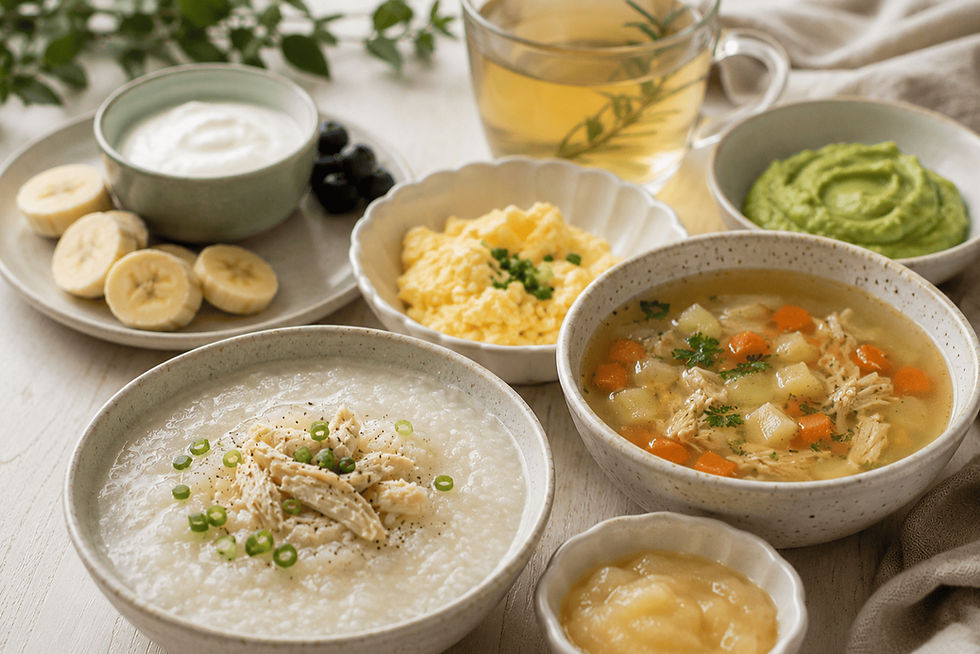
Gentle foods may include:
Rice
Toast
Potatoes
Eggs
Oatmeal
Soup
Yogurt
These foods may not look exciting, but they can keep your body fueled when digestion is sluggish.
Eating something gentle is better than eating nothing.
Blood Sugar and Fatigue Are Connected
Fatigue can worsen when blood sugar swings.
Skipping meals or relying only on quick sugar can lead to:
Energy spikes
Sudden crashes
Brain fog
Irritability
Pairing carbohydrates with protein or fat, even in small amounts, helps support steadier energy.
This does not require a diet. It requires awareness.
Low Energy Does Not Mean Low Worth
One of the hardest parts of fatigue is the emotional layer.
When energy is gone, people often feel:
Frustrated
Ashamed
Lazy
Like they are failing
Fatigue is not a moral issue.
Your body may be working very hard behind the scenes. Nourishing it during fatigue is an act of care, not weakness.
Using Better Days to Support Hard Days
On days when energy is a little better, small preparations can make fatigue days easier.
This might look like:
Making extra soup
Cooking double portions
Stocking easy snacks
Restocking foods you tolerate well
This is not meal prepping for perfection. It is creating a safety net.
Fatigue Changes Over Time
Fatigue is not static.
Some days it is mild. Some days it is crushing. Some days it surprises you.
Eating for your body means adjusting as fatigue changes, not holding yourself to one standard.
I am still learning this myself.
Nourishment Counts Even When It’s Simple
A bowl of cereal counts. A handful of trail mix counts. A cup of soup counts. A yogurt eaten slowly counts.
These moments of nourishment add up.
Health is built through consistency over time, not heroic effort on exhausted days.
What Comes Next
Next in the Eating for Your Body series, we can move into:
Eating for Your Body: Why Appetite Disappears and What to Do About It
This will help people understand loss of appetite without panic or pressure.
You Are Allowed to Make Eating Easier
If fatigue makes food hard, you are not broken. If simple foods are what you can manage, that is okay. If eating looks different now, that matters.
Support matters.
Where to Go From Here
Fatigue affects your meals, your motivation, and your recovery. At Surviving Life Lessons, we believe in life survivors helping life strugglers. Our Healthy Eating & Nutrition Support Group is a place to share easy meals for tired days, and our Chronic Illness & Chronic Pain Support Group understands living with ongoing fatigue. You can also browse our Community Groups Catalog to find every group that fits where you are right now.
For more, read Eating for Your Body on Low Energy Days or Eating for Your Body: Grocery Shopping When Energy Is Low.
Your Story Matters
We need your nice comments below! Your thoughts, experiences, and lessons learned might be exactly what someone else needs to hear today.
Drop a comment, Say Hello, and join the conversation.
Need More Personalized Support?
Everyone's journey is unique. If you're looking for personalized guidance, encouragement, or one-on-one support, explore our services to find the option that's right for you. We're here to help you take your next step with confidence and hope.
Helpful Resources for Your Journey
Explore our collection of books, journals, coloring books, and printable PDFs designed to encourage, inspire, and support you every step of the way.
References
Mayo Clinic Staff. Fatigue Management and Nutrition. mayoclinic.org
Cleveland Clinic. Fatigue and Chronic Illness. clevelandclinic.org
Harvard T.H. Chan School of Public Health. Energy Balance and Nutrition. hsph.harvard.edu
American Cancer Society. Managing Fatigue During and After Cancer Treatment. cancer.org
About the Author:
Deborah Ann Martin is the founder of Surviving Life Lessons, a published author, poet, speaker, and trainer with over 20 years of management experience across multiple industries. An MBA graduate, U.S. veteran, single mother, and rare cancer survivor, Deborah brings both professional expertise and lived experience to her writing on resilience, leadership, personal growth, and overcoming adversity. Her mission is to empower others with practical wisdom and real-life insight to navigate life’s challenges with strength and purpose.


.png)
Comments