

Eating for Your Body: Portion Size, Clean Plates, and Knowing When to Stop

Updated: 2 days ago
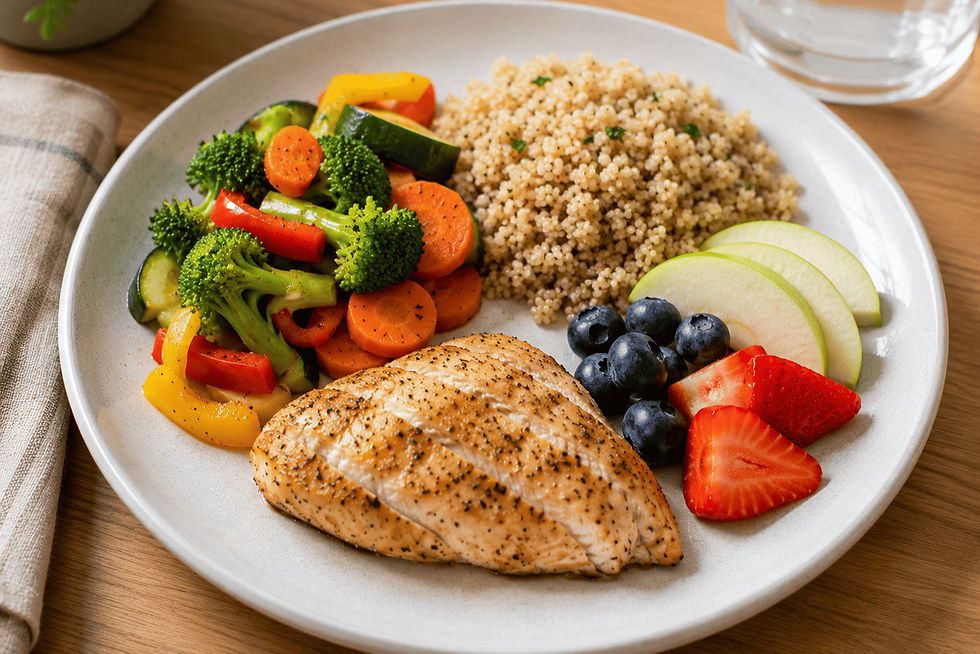
When You Were Taught to Finish Everything
Many of us grew up hearing the same messages.
Clean your plate.
Don’t waste food.
Someone in the world is starving.
Eat what you’re served.
Those lessons were often taught with good intentions, but they shaped how many of us eat well into adulthood. We learned to ignore fullness, override comfort, and keep eating even when our bodies were done.
I lived this too.
Even now, I sometimes notice the pull to finish what’s in front of me, especially in restaurants or at gatherings. But with chronic pain, reflux, medications, and blood sugar concerns, finishing everything is not always the healthiest choice.
This post is part of the Eating for Your Body series. It explains why portion size matters, why finishing everything is not required, and how learning to stop when your body says “enough” supports long-term health.
Portion Size Is Not the Same as Deprivation
Choosing a smaller portion does not mean you are restricting yourself.
It means you are:
Respecting your body
Managing symptoms
Supporting digestion
Reducing discomfort
Making food work for you
Using a smaller plate can help portions feel satisfying without being overwhelming. A full small plate often feels better than a half-empty large plate.
Portion size is a tool, not a punishment.
The Clean Plate Habit Overrides Body Signals
When you are taught to clean your plate, you learn to ignore fullness cues.
You stop noticing:
When food stops tasting as good
When your stomach feels comfortable
When reflux starts
When energy drops
Instead, you focus on finishing.
For people with reflux, blood sugar issues, pain, or fatigue, overeating in one sitting can cause:
Heartburn
Nausea
Pain flares
Blood sugar spikes
Extreme tiredness
Listening to your body matters more than finishing food.
You Are Allowed to Stop Eating
This sounds simple, but it can feel uncomfortable.
Stopping does not mean:
You are ungrateful
You wasted food
You lack willpower
You failed
It means your body has had enough.
Eating for your body includes permission to stop when comfort starts to fade.
You Don’t Have to Eat It All Right Now
One of the most freeing lessons I learned is that you do not have to eat everything at once.
If you enjoy something, you can:
Eat some now
Save the rest for later
Enjoy it again when you actually want it
That is willpower used wisely, not denied pleasure.
The Texas Sheet Cake Lesson
A friend once made me a Texas sheet cake.
Instead of cutting large pieces and feeling pressure to finish them, I cut the cake into small 1x1 squares and froze them.
Now, when I want chocolate:
I take one square
I enjoy it
I don’t feel sick
I don’t overeat
I don’t feel guilty
This approach lets food stay enjoyable without becoming overwhelming.
Why the First Bites Matter Most
Research and experience both show that the first few bites of food are the most satisfying.
The flavors are strongest. The pleasure is highest. The craving is met.
After that, we often keep eating out of habit, not enjoyment.
Recognizing this helps release the pressure to finish everything. Enjoyment does not require excess.
Restaurant Portions Are Not Built for Comfort
Restaurant portions are often much larger than what most bodies need at one meal.
One strategy that has helped me:
Ask for a to-go container when the meal arrives
Put half the food in it right away
This does two things:
Prevents mindless picking while talking
Protects my body from overeating
Gives me another meal later
This is not wasteful. It is practical.
Eating Slower Helps Portions Self-Regulate
When meals are rushed, it is easier to overeat.
Eating slower helps:
Fullness signals catch up
Reflux stay calmer
Blood sugar stabilize
Enjoyment increase
You do not need to eat fast to keep up with others.
Your body’s comfort matters.
Reflux Makes Portion Awareness Even More Important
If you live with reflux, portion size plays a big role.
Large meals can:
Increase pressure on the stomach
Worsen heartburn
Disrupt sleep
Cause pain and nausea
Smaller portions eaten more often often feel better than large meals eaten all at once.
This is not about eating less overall. It is about spreading food out in a way your body tolerates.
Portion Awareness Is a Skill You Can Learn
Portion awareness improves with practice.
You might start by:
Using smaller plates
Serving less initially
Pausing midway through a meal
Asking if you’re still enjoying the food
Saving leftovers intentionally
There is no timeline for mastering this. Gentle awareness builds over time.
Food Is Not a Test of Gratitude
Being grateful for food does not require finishing it.
You can honor food by:
Enjoying it
Eating what you need
Respecting your body
Avoiding discomfort
Your health is not disrespectful.
Eating for Your Body Means Trusting Yourself
Trusting yourself around food includes trusting that:
You can stop
You can save food
You can enjoy it later
You can choose comfort over habit
I am still practicing this myself.
What Comes Next
Next in the Eating for Your Body series, we can move into:
Eating for Your Body: Letting Go of All-or-Nothing Eating
This will tie portions, consistency, and flexibility together.
You Are Allowed to Eat Comfortably
You do not need to clean your plate. You do not need to finish dessert. You do not need to eat past comfort.
You deserve to eat in a way that supports your body.
Support matters.
You can:
Share portion strategies that work for you in the comments
Join Neighbor Talk for open conversation
Explore Next Step Coaching to build realistic habits using SMART goals
This space exists for people learning how to nourish themselves with awareness and compassion.
Important Disclaimer
The information shared on this blog is for educational and informational purposes only. I am not a doctor, pharmacist, dietitian, or other licensed medical professional. Nothing on this site is intended to diagnose, treat, cure, or prevent any medical condition.
The content shared here is based on lived experience, personal research, and publicly available medical information explained in everyday language. Everyone’s body, medical history, and treatment plan are different.
Always talk with your health care provider or medical team when symptoms appear or changes are needed. This blog is meant to help with understanding and motivation, not replace medical care.
Your Story Matters
We need your nice comments below! Your thoughts, experiences, and lessons learned might be exactly what someone else needs to hear today.
Drop a comment, Say Hello, and join the conversation.
Need More Personalized Support?
Everyone's journey is unique. If you're looking for personalized guidance, encouragement, or one-on-one support, explore our services to find the option that's right for you. We're here to help you take your next step with confidence and hope.
Helpful Resources for Your Journey
Explore our collection of books, journals, coloring books, and printable PDFs designed to encourage, inspire, and support you every step of the way.
References
Harvard T.H. Chan School of Public Health. Portion Size and Eating Habits. hsph.harvard.edu
Mayo Clinic Staff. Mindful Eating and Portion Control. mayoclinic.org
Cleveland Clinic. Overeating and Digestive Health. clevelandclinic.org
American Gastroenterological Association. Reflux and Meal Size. gastro.org
About the Author:
Deborah Ann Martin is the founder of Surviving Life Lessons, a published author, poet, speaker, and trainer with over 20 years of management experience across multiple industries. An MBA graduate, U.S. veteran, single mother, and rare cancer survivor, Deborah brings both professional expertise and lived experience to her writing on resilience, leadership, personal growth, and overcoming adversity. Her mission is to empower others with practical wisdom and real-life insight to navigate life’s challenges with strength and purpose.


.png)
Comments