

SMART Parenting Goals: A Guide for Busy Families


Parenting Is Hard Work
Parenting is beautiful, exhausting, rewarding, and overwhelming, sometimes all in the same hour. There are lunches to pack, schedules to juggle, homework to check, feelings to manage, and a house that never seems to stay clean. And on top of it all, you are trying to raise kind, healthy, confident people.
I raised four children, part of that time as a single mother while serving in the Navy and later while working in management. I know what it feels like to be pulled in a dozen directions at once. I also know the guilt of feeling like you are never doing enough.
What helped me most was not trying to be a perfect parent. It was focusing on a few small, meaningful things and doing them consistently. That is exactly what SMART parenting goals help you do.
This guide is the starting place for our SMART Goals for Parenting and Family Life series. It covers busy parents, stay-at-home moms, parenting as a team, and strengthening family bonds.
Why SMART Parenting Goals Help
Parenting goals are often big and vague: "Be more patient." "Spend more time with the kids." "Get the family organized." Those are great intentions, but they are hard to act on when you are already stretched thin.
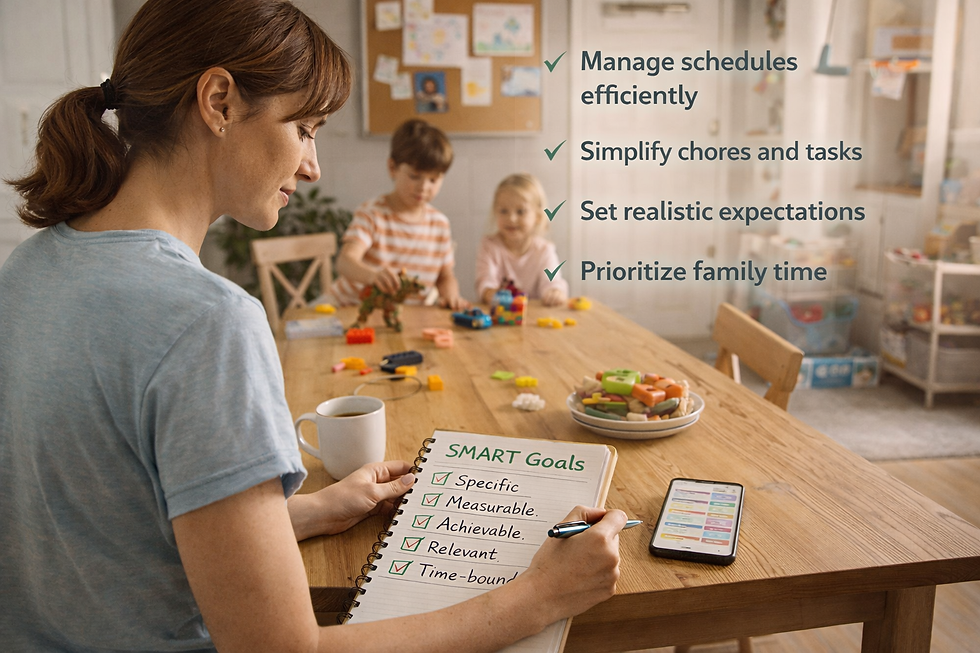
SMART parenting goals make them doable:
Specific: "Read with my child before bed."
Measurable: "For ten minutes."
Achievable: Fits your evening routine.
Relevant: Builds connection and a love of reading.
Time-bound: "Four nights a week this month."
Together: "I will read with my child for ten minutes before bed four nights a week this month."
Small, consistent actions like this often matter more to children than big, occasional outings. Kids thrive on predictability, attention, and warmth.
Start With What Matters Most
Every family is different. Before setting SMART parenting goals, think about what your family needs most right now.
Ask yourself:
What feels most stressful in our home right now?
When do my kids and I feel most connected?
What do I want my children to remember about their childhood?
What is one area where I would like to feel more calm or confident as a parent?
Pick one or two areas to focus on. You do not need to change everything at once.
SMART Parenting Goals Examples
Here are examples for common parenting needs.
Connection
I will spend ten minutes of one-on-one time with each child, without screens, three times a week this month.
Calmer Mornings
I will prepare backpacks and lay out clothes with my kids the night before, every school night for two weeks.
Patience
When I feel frustrated, I will take three deep breaths before responding to my child, every day this week.
Family Meals
I will have dinner together as a family at least three nights a week for the next month.
Routines
I will follow the same bedtime routine with my kids every night for two weeks.
Encouragement
I will give each child one specific compliment every day this week.
Self-Care for Parents
I will take twenty minutes for myself, without interruptions, three times a week.
Teamwork
I will have a fifteen-minute check-in with my partner every Sunday to plan the week.
Goals for Busy Parents
When you are busy, parenting can start to feel like a long to-do list. SMART goals help you focus on what matters most and let go of the rest.
Helpful strategies include:
Choosing one priority each day.
Building small connection moments into routines, like car rides or bedtime.
Simplifying meals and chores.
Creating flexible routines instead of strict schedules.
Giving yourself grace when things do not go as planned.
Goals for Stay-at-Home Moms
Staying home with children is full-time work, often without breaks, recognition, or adult conversation. Many stay-at-home moms lose track of their own needs and identity.
SMART goals for stay-at-home moms might include building a simple daily rhythm, carving out personal time, connecting with other moms, or working on a personal interest. Read SMART Goals for Stay-at-Home Moms, and if you are thinking about going back to work, SMART Goals for Stay-at-Home Moms Returning to Work.
Parenting as a Team
When two parents are raising children, teamwork matters. Kids feel safer when parents are on the same page about rules, routines, and expectations. Disagreements are normal, but how you handle them shapes your family.
SMART teamwork goals might include a weekly planning meeting, agreeing on a few key family rules, dividing chores fairly, or supporting each other's decisions in front of the kids. Read SMART Goals for Parenting Together as a Team.
If you are co-parenting after divorce, many of the same ideas apply, along with clear communication and keeping kids out of adult conflicts.
Strengthening Family Bonds
Family bonds grow through shared time, traditions, and everyday moments. They do not require money or perfect plans.
Simple ideas include family game nights, walks together, cooking a meal as a team, sharing highs and lows at dinner, or creating a small weekly tradition like pancake Saturdays. Read SMART Goals for Strengthening Family Bonds.
Taking Care of Yourself as a Parent
You cannot give what you do not have. Parents who are exhausted, stressed, and running on empty have less patience and energy for their kids. Taking care of yourself is not selfish. It is part of good parenting.
SMART self-care goals for parents might include going to bed thirty minutes earlier, asking for help with one task each week, scheduling a regular break, or connecting with other parents. Long-term stress affects your health, so small acts of care truly matter.
When Parenting Feels Overwhelming
Some seasons of parenting are especially hard: a new baby, a child with special needs, a teenager in crisis, a divorce, or a parent's illness. In those seasons, your goals should be extra small and kind.
It is okay if your goal for the week is simply to get everyone fed and to bed safely. That counts. If you are struggling with your mental health, reach out to a doctor, counselor, or support group. You do not have to do this alone.
A Four-Week Family Starter Plan
If you want a simple structure for your family, try this four-week plan. Each week adds one small habit.
Week one: Connection. Spend ten minutes of one-on-one time with each child, three times this week, with no phones or screens.
Week two: Routine. Choose one routine that feels chaotic, like mornings or bedtime, and create a simple, predictable plan for it.
Week three: Family time. Plan one family activity this week, like a game night, a walk, or cooking dinner together.
Week four: Review. Talk with your family about what felt good and what was hard. Choose which habits to keep and one new small goal to try.
At the end of the month, you will likely notice more calm and connection in your home.
Involve Your Kids in Setting Goals
Children can learn to set SMART goals too, and it is a skill that will help them for life. Start with simple goals that match their age:
A younger child might set a goal to make their bed every morning this week.
A school-age child might set a goal to read for fifteen minutes four nights a week.
A teen might set a goal to save $10 from each paycheck or allowance for a month.
Help them make the goal specific and measurable, and celebrate when they reach it. When kids see you setting and working on your own goals, they learn that growth is a normal, healthy part of life.
Parenting Through Different Ages and Stages
Every stage of childhood brings new challenges. Babies and toddlers need constant care and patience. School-age children need routines, encouragement, and help with homework. Teens need trust, boundaries, and space to grow. Adult children need respect and a different kind of connection.
Your SMART parenting goals should change as your children grow. Review them every few months and ask, "What does my child need from me in this stage?" A goal that worked when your child was six may not fit when they are sixteen. Adjusting your goals is a sign of a thoughtful, responsive parent.
Small Parenting Wins Worth Celebrating
Parenting is full of small victories that often go unnoticed. Celebrate moments like these:
You stayed calm during a meltdown.
You had a real conversation with your teen.
You made it to school on time all week.
You ate dinner together as a family.
You took time for yourself without guilt.
You said sorry to your child after losing your temper.
Each of these matters. Write them down, and remind yourself that you are doing a good job, even on the hard days.
You Are Not Alone
Parenting can feel lonely, especially if you are a single parent, a stay-at-home parent, or far from family. Reach out to other parents, join a support group, or ask friends and family for help. You were never meant to raise children alone. Connection with others who understand can make the hard days lighter and the good days even better.
When Parents Disagree
Even loving parents disagree about rules, discipline, screen time, money, or schedules. Disagreement is normal. What matters is how you handle it. Try to talk about big parenting decisions privately, not in front of the kids. Listen to each other's reasons. Look for a middle ground you can both support. And once you agree, back each other up.
If you are co-parenting after a separation or divorce, the same ideas apply. Keep communication focused on the children, put agreements in writing, and avoid using the kids as messengers. A SMART goal might be: "I will send one calm, brief update to my co-parent about the kids' schedule every Sunday this month."
Let Go of the Perfect Parent Myth
Social media is full of picture-perfect families with spotless homes, homemade snacks, and smiling kids. Real family life is messier. Toys are on the floor. Dinner is sometimes cereal. Tempers flare. That is normal. Your children do not need a perfect parent. They need a present, loving parent who keeps trying. Let go of comparison and focus on the small things that matter most in your own home. When you make a mistake, apologize, repair, and keep going. That teaches your children more than perfection ever could.
Make Memories in Small Ways
The moments your children remember most are often small: a silly song in the car, pancakes on Saturday, a bedtime story, or a walk where you really listened. You do not need expensive trips or big plans to build a happy childhood. Choose one small family ritual this month and repeat it.
Frequently Asked Questions
What are examples of SMART parenting goals?
Examples include spending ten minutes of screen-free time with each child three times a week, keeping the same bedtime routine for two weeks, or eating family dinner together three nights a week.
How do I find time for parenting goals when I am so busy?
Build goals into routines you already have, like car rides, meals, or bedtime. Small moments count.
What if my kids do not cooperate?
Focus on your own actions, like staying calm and consistent. Kids often respond over time to steady routines and attention.
Should my kids set SMART goals too?
Yes. Older children can learn to set simple SMART goals for school, chores, or activities. It builds responsibility and confidence.
Journal Prompts for Parents
What do I love most about being a parent?
What feels hardest right now?
What is one small thing I could do this week to connect with my child?
How am I taking care of myself?
What do I want my children to remember about our family?
Small Moments, Big Impact
You do not have to be a perfect parent. You just need to keep showing up with love, one small moment at a time. SMART parenting goals help you focus on what matters most: connection, calm, and care. Start small. Be consistent. Give yourself grace. Your children will remember how you made them feel far more than anything else.
Posts in This Series
These posts make up our SMART Goals for Parenting and Family Life series. More are coming, including SMART goals for co-parenting after divorce.
Where to Go From Here
SMART parenting goals are easier to keep when other parents have your back. At Surviving Life Lessons, we believe in life survivors helping life strugglers. Our Single Parent Support Group is a place for parents carrying the load on their own, and our Parenting Teens Support Group helps you navigate the teenage years with more patience and hope. You can also browse our Community Groups Catalog to find every group that fits where you are right now.
Your Story Matters
We need your nice comments below! Your thoughts, experiences, and lessons learned might be exactly what someone else needs to hear today.
Drop a comment, Say Hello, and join the conversation.
Need More Personalized Support?
Everyone's journey is unique. If you're looking for personalized guidance, encouragement, or one-on-one support, explore our services to find the option that's right for you. We're here to help you take your next step with confidence and hope.
Helpful Resources for Your Journey
Explore our collection of books, journals, coloring books, and printable PDFs designed to encourage, inspire, and support you every step of the way.
References
Centers for Disease Control and Prevention. Essentials for Parenting. cdc.gov
American Psychological Association. Building Your Resilience. apa.org
Harvard Health Publishing. How Stress Harms Your Physical and Psychological Health. health.harvard.edu
About the Author:
Deborah Ann Martin is the founder of Surviving Life Lessons, a published author, poet, speaker, and trainer with over 20 years of management experience across multiple industries. An MBA graduate, U.S. veteran, single mother, and rare cancer survivor, Deborah brings both professional expertise and lived experience to her writing on resilience, leadership, personal growth, and overcoming adversity. Her mission is to empower others with practical wisdom and real-life insight to navigate life’s challenges with strength and purpose.


Comments