

Promotion Journal: Grow Into Your Next Leadership Role

Updated: 3 days ago
Have you ever felt stuck in your job? Like no matter how hard you work, you just can’t seem to move up? You’re not alone. Many people hit a wall in their careers and wonder why they can’t get promoted. A promotion journal helps you notice your own growth.
The good news is, there’s a simple tool that can help you break through that wall: journaling. Writing down your thoughts, feelings, and goals can reveal hidden blind spots and help you grow into the leader you want to be.
At www.survivinglifelessons.com, we believe in the power of sharing stories and supporting each other. This post will guide you through why people plateau, how journaling can help, and a step-by-step journal method to evaluate yourself and plan your growth.
Plus, you’ll find prompts to explore your strengths, weaknesses, and leadership gaps.
Why Most People Plateau in Their Careers
Many people work hard but still feel stuck. This happens because growth isn’t just about doing more tasks or working longer hours. It’s about learning new skills, understanding yourself better, and adapting to new challenges.
When you stop growing, you stop moving forward.
One reason for this plateau is that people don’t always see their own blind spots. These are areas where you might be holding yourself back without realizing it. Maybe you avoid difficult conversations, or you don’t ask for help when you need it. These blind spots can keep you from showing your full potential.
Another reason is that people often don’t take time to reflect. They get caught up in daily work and forget to think about what they want next or how to get there.
Without reflection, it’s hard to set clear goals or notice what needs to change.

Taking time to write helps you see what’s really going on inside your mind.
Promotion Journal: How Journaling Reveals Blind Spots
Journaling is more than just writing about your day. It’s a way to explore your thoughts and feelings honestly. When you write regularly, you start to notice patterns. You might see where you get stuck or what fears hold you back.
For example, you might write about a meeting where you felt nervous to speak up. Later, reading your journal, you realize you often avoid sharing ideas because you fear being judged.
This is a blind spot. Once you see it, you can work on building confidence.
Journaling also helps you track your progress. You can look back and see how you handled challenges before and what you learned. This makes it easier to plan your next steps.
A Self-Evaluation and Growth Plan Journal Method
Here’s a simple way to use journaling to grow as a leader. Try this method once a week or every two weeks. It will help you check in with yourself and plan your growth.
Step 1: Self-Evaluation
Start by asking yourself honest questions. Write your answers without judging. Here are some to get you started:
What are my biggest strengths at work?
What tasks or situations do I find most challenging?
How do I handle feedback or criticism?
What do others say I do well? What do they say I could improve?
When have I felt most proud of my work recently?
Step 2: Identify Leadership Gaps
Think about what skills or qualities you need to grow into the next level of leadership. Write about:
What leadership skills do I admire in others?
Which of these skills do I already have?
Which skills do I need to develop?
Are there habits or attitudes holding me back?
How do I handle stress and conflict?
Step 3: Create a Growth Plan
Based on your answers, set small, clear goals. For example:
Practice speaking up in meetings at least once a week.
Ask a trusted colleague for feedback on my communication.
Read one leadership book or article each month.
Try a new way to handle stress, like deep breathing or a short walk.
Write down your goals and check in on them regularly.
Adjust as you learn more about yourself.
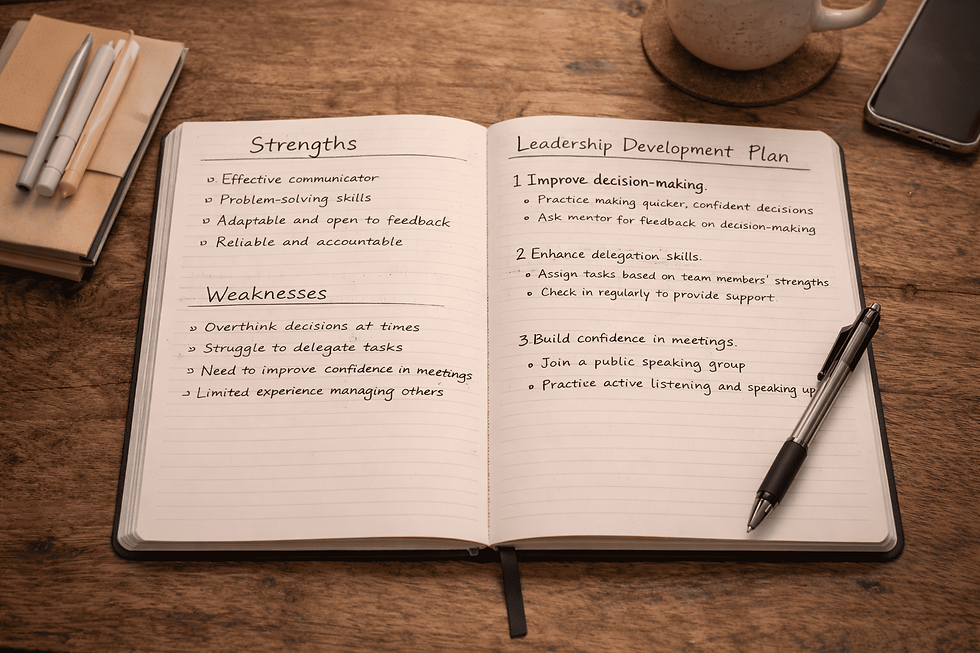
Writing your goals helps you stay focused and motivated.
Prompts for Strengths, Weaknesses, and Leadership Gaps
Sometimes it’s hard to know where to start. Here are some journal prompts to guide your writing:
Strengths
What do I do better than most people I work with?
When do I feel most confident at work?
What positive feedback have I received recently?
How do my strengths help my team or company?
Weaknesses
What tasks do I avoid or dislike?
When do I feel frustrated or stuck?
What feedback have I received that was hard to hear?
How do I react when things don’t go as planned?
Leadership Gaps
What leadership qualities do I want to improve?
How do I handle difficult conversations?
Do I ask for help when I need it?
How well do I manage my time and priorities?
Answering these prompts honestly will give you a clearer picture of where you are and where you want to go.
How Our Community Supports Your Growth
At www.survivinglifelessons.com, we know that growth is easier when you’re not alone. Our groups are here to support those who are hurting and those who want to give back. Sharing your experiences and hearing others’ stories can inspire you and help you feel less isolated.
We also offer coaching content and self-help products designed to guide you through tough times and help you build emotional strength.
Journaling is one of the tools we recommend because it’s simple, personal, and powerful.

Our groups provide a safe space to share and grow together.
Final Thoughts on Writing Your Way Into Leadership
If you want to move up in your career, start by looking inside. Journaling helps you find the blind spots that hold you back and shows you the path forward.
Use the self-evaluation and growth plan method to set clear goals and track your progress.
Where to Go From Here
Preparing for promotion affects your skills, your confidence, and your career path. At Surviving Life Lessons, we believe in life survivors helping life strugglers. Our Career Growth & Advancement Support Group is a place to plan your next step, and our Journaling & Writing for Healing Group can help you build a journaling habit. You can also browse our Community Groups Catalog to find every group that fits where you are right now.
Next, read Leadership Journaling Series: Reset, Reflect, and Grow Daily or Feedback Is Fuel: Supervisor Growth Through Feedback.
Your Story Matters
We need your nice comments below! Your thoughts, experiences, and lessons learned might be exactly what someone else needs to hear today.
Drop a comment, Say Hello, and join the conversation.
Need More Personalized Support?
Everyone's journey is unique. If you're looking for personalized guidance, encouragement, or one-on-one support, explore our services to find the option that's right for you. We're here to help you take your next step with confidence and hope.
Helpful Resources for Your Journey
Explore our collection of books, journals, coloring books, and printable PDFs designed to encourage, inspire, and support you every step of the way.
About the Author:
Deborah Ann Martin is the founder of Surviving Life Lessons, a published author, poet, speaker, and trainer with over 20 years of management experience across multiple industries. An MBA graduate, U.S. veteran, single mother, and rare cancer survivor, Deborah brings both professional expertise and lived experience to her writing on resilience, leadership, personal growth, and overcoming adversity. Her mission is to empower others with practical wisdom and real-life insight to navigate life’s challenges with strength and purpose.





.png)
Comments