

Picking Up Trash and Recycling Right: Small Acts That Teach Mindfulness and Responsibility

Updated: 1 day ago
I will admit it. I am lazy when it comes to picking up trash. It is inconvenient. I do not always want to bend down, get my hands dirty, or carry a bag around. But I am trying to be better. I want to be better because I want my kids and grandkids to see me setting the example.
It is easy to say, “I did not create this mess, so why should I clean it?” But the truth is, we all have a part to play. When trash is left alone, it does not just make things look bad — it causes problems that affect everyone. Trash attracts bugs and pests that spread disease. It ends up in rivers and oceans, harming fish and wildlife. It breaks down into microplastics that get into our food and water.
The simple act of picking up trash can protect health, improve communities, and lift your own mood. There is something rewarding about seeing a clean park, a clear riverbank, or a tidy roadside. It makes the world feel cared for again.
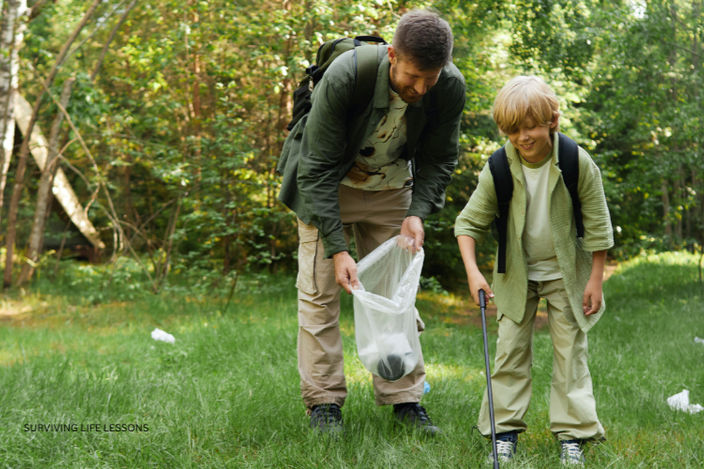
Why Picking Up Trash Matters
We often take clean spaces for granted until they are gone. Litter is more than just an eyesore. According to the Environmental Protection Agency (EPA), improperly managed waste contaminates soil, groundwater, and air. It harms animals that mistake plastic for food, and it creates breeding grounds for insects that carry disease.
When you pick up trash, even one piece, you help stop that chain reaction. You protect water quality, reduce pollution, and make public areas safer. You also set an example for others. People are more likely to keep areas clean when they see someone else caring for them.
And it does not have to be complicated. You can start small. Pick up a cup you see on a walk, clean up after a picnic, or join a community cleanup. Every small effort matters because it adds up.
How Picking Up Trash Helps You
It might sound strange, but picking up trash is good for your mind and body. The Harvard Health Publishing team found that outdoor activities that combine movement and purpose — like community cleanups — lower stress and boost mental well-being.
When you spend time outside helping the environment, your brain releases dopamine, the same “feel-good” chemical that appears during exercise or accomplishment. You might start out annoyed about the inconvenience, but you end up feeling proud that you did something that matters.
It also builds mindfulness. You start noticing where litter gathers, how people use public spaces, and how easily small habits create big messes. That awareness makes you more thoughtful about your own habits recycling properly, reusing containers, and wasting less.
The Ripple Effect of Clean Spaces
Clean environments change how people behave. When parks are tidy and sidewalks are clear, families are more likely to use them. When rivers and trails look cared for, communities take pride in them. Researchers from the Greater Good Science Center at UC Berkeley found that clean, green spaces increase happiness and cooperation in neighborhoods. People feel safer and more connected when they share responsibility for their surroundings.
I have seen this happen. Parks look brighter after volunteers spend a morning cleaning them. Rivers sparkle again when groups remove old tires and trash. You can feel the difference in the air literally and emotionally.
It reminds me that beauty and responsibility go hand in hand. We cannot always control what others do, but we can choose to be part of the solution.
The Inconvenience That Feels Good Later
Let’s be honest cleaning up after others does not feel fun. It takes time, effort, and sometimes a strong stomach. But afterward, you feel lighter. You see the difference your hands made, and that brings a sense of peace.
The American Psychological Association reports that purposeful physical activity, like cleaning or organizing, helps relieve stress and increase satisfaction. Picking up trash gives you instant results. You see improvement right away, and that visual progress releases motivation to keep going.
Even if you only pick up trash once a month or during an annual cleanup event, you are still making a difference. Small, consistent effort beats perfection every time.
The Self-Discovery Side of Cleanup
Picking up trash teaches humility and gratitude. It reminds you that none of us live separately from the environment. The world is shared, and every bit of effort helps protect the air we breathe and the water we drink.
When you choose to help, you start discovering what matters to you. Maybe you realize you love being outdoors. Maybe you find that helping your community gives you energy. Maybe you simply feel calmer after cleaning up a messy space. Whatever it is, that feeling connects you to purpose.
For me, it is about responsibility. I do not want to keep saying, “Someone else will do it.” I want my children and grandchildren to see that caring for the world is everyone’s job. Even if I am lazy sometimes, I want them to remember that I tried. That I cared enough to take small steps, even when it was inconvenient.
How Recycling Fits In
Picking up trash is only part of the puzzle. Recycling right helps reduce the need for new materials and keeps waste out of landfills. The National Institutes of Health and the EPA both emphasize that recycling reduces greenhouse gases and conserves natural resources.
Here are a few simple recycling reminders:
Rinse containers before recycling. Dirty containers can spoil an entire batch.
Avoid wish-cycling. If you are unsure whether something is recyclable, check your local guidelines.
Reuse before recycling. Glass jars, sturdy containers, and boxes can often be used again.
Recycle batteries, electronics, and hazardous items properly. Many communities have drop-off centers or collection events.
Recycling is not about perfection. It is about consistency. It is about saying, “I care enough to do my part.”
What You Can Try Today
Start small. Pick up three pieces of litter when you go for a walk.
Join a local cleanup. Many parks, towns, and schools organize annual or monthly cleanup events.
Teach by example. Take children or grandchildren with you to show that one person can make a difference.
Recycle correctly. Learn your city’s recycling rules and post them near your bins.
Carry a bag in your car. You never know when you will see a place that needs a little care.
Even one act of cleanup makes a difference. You might not notice right away, but others will. And over time, your actions create ripples that reach farther than you can see.
Support on Your Journey
Picking up trash and recycling right are small, mindful acts that help you discover your own values. They teach patience, responsibility, and compassion for the world around you. You realize that caring for your environment is not a burden — it is a privilege.
In our groups, we share practical ways to build better habits and make communities cleaner and kinder. Whether you pick up trash in your neighborhood, organize a local cleanup, or simply recycle with care, you are already part of something meaningful.
The next post in this series, “Donating Unused Items: How Decluttering Your Life Helps Others Find What They Need,” will explore how letting go of what you no longer use can create space for new purpose and connection.
Because even the smallest act of care for the world helps keep it beautiful — for all of us.
Your Story Matters
We need your nice comments below! Your thoughts, experiences, and lessons learned might be exactly what someone else needs to hear today.
Drop a comment, Say Hello, and join the conversation.
Need More Personalized Support?
Everyone's journey is unique. If you're looking for personalized guidance, encouragement, or one-on-one support, explore our services to find the option that's right for you. We're here to help you take your next step with confidence and hope.
Helpful Resources for Your Journey
Explore our collection of books, journals, coloring books, and printable PDFs designed to encourage, inspire, and support you every step of the way.
References
Environmental Protection Agency (EPA): "Keep America Beautiful: The Importance of Reducing Litter", https://www.epa.gov/trash-free-waters
Harvard Health Publishing: "The Mental Health Benefits of Outdoor Activity", https://www.health.harvard.edu/mind-and-mood/the-mental-health-benefits-of-exercise
Greater Good Science Center, UC Berkeley: "How Clean Spaces Boost Happiness and Cooperation", https://greatergood.berkeley.edu/article/item/how_clean_spaces_boost_happiness
American Psychological Association: "The Benefits of Purposeful Physical Activity", https://www.apa.org/news/press/releases/2020/04/purposeful-activity
National Institutes of Health: "Recycling for a Healthier Planet", https://newsinhealth.nih.gov/2019/04/recycling-planet
About the Author:
Deborah Ann Martin is the founder of Surviving Life Lessons, a published author, poet, speaker, and trainer with over 20 years of management experience across multiple industries. An MBA graduate, U.S. veteran, single mother, and rare cancer survivor, Deborah brings both professional expertise and lived experience to her writing on resilience, leadership, personal growth, and overcoming adversity. Her mission is to empower others with practical wisdom and real-life insight to navigate life’s challenges with strength and purpose.


.png)
Comments