

From Survival to Gratitude: Remembering the Good Does Not Erase the Hard

Updated: Sep 29
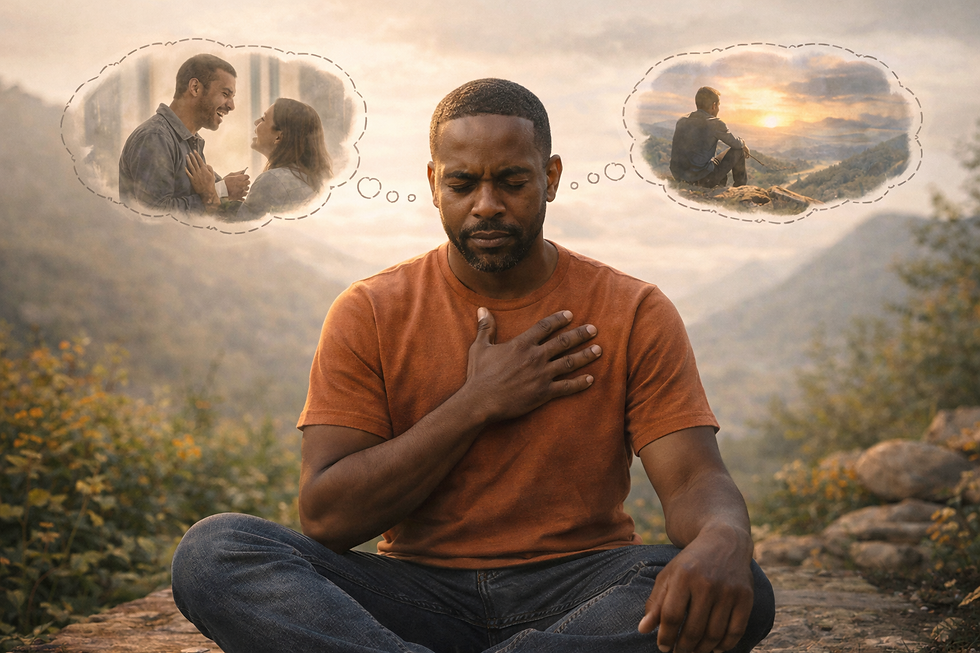
One of the quiet struggles many people carry is guilt for remembering good moments from difficult seasons.
There is an unspoken belief that if a chapter of life was painful, every memory from that time should be painful too. That finding joy, laughter, connection, or peace during hardship somehow diminishes the seriousness of what was endured.
This belief keeps many people stuck.
They question their own memories. They minimize moments of happiness. They feel conflicted when something good surfaces from a time that was otherwise heavy.
But remembering the good does not erase the hard.
It simply tells a fuller, more honest story.

Why the Mind Separates Good and Bad: Remembering the Good Does Not Erase the Hard
The human mind tends to categorize experiences into simplified narratives. This helps make sense of complex emotions, but it also limits understanding.
When a season is labeled as “bad,” everything inside it often gets filed the same way. Pain becomes the headline. Everything else becomes footnotes or is erased entirely.
But lived experience is rarely that clean.
Most seasons contain both struggle and relief. Fear and hope. Loss and connection. Chaos and moments of peace.
When the mind refuses to allow good memories from hard times, it reinforces the belief that pain defines the entire experience.
That belief weighs heavily on mental health.
The Cost of Rejecting Good Memories
When people feel guilty for remembering positive moments from difficult seasons, several things happen internally.
They begin to distrust their own emotional experience.
They feel disconnected from parts of themselves that found joy.
They reinforce the idea that suffering must be total to be valid.
This creates emotional rigidity.
Instead of healing, the mind stays locked in one interpretation of the past. Growth becomes harder because the story never evolves.
Allowing good memories to coexist with hard ones creates flexibility. It opens space for perspective.
Joy During Hardship Is a Survival Strength
Finding joy during difficult seasons is not accidental. It is a survival strength.
It shows adaptability. Emotional intelligence. The ability to stay connected to life even when circumstances are unstable.
Moments of joy during hardship might look small:
Laughing at something unexpected
Enjoying a quiet moment
Feeling connected to someone who understands
Appreciating beauty in ordinary things
These moments do not excuse the hardship. They show that the hardship did not consume everything.
That matters.
Why Guilt Shows Up When Things Improve
Guilt often appears when life begins to stabilize or improve.
People look back and wonder if enjoying the present somehow dishonors the past. They may feel uncomfortable experiencing peace after chaos, as if struggle must continue to validate what they endured.
This guilt is rooted in loyalty to pain.
It is a belief that suffering deserves permanence. That moving forward means forgetting or minimizing.
In reality, healing honors the past more than staying stuck in it ever could.
Perspective Allows Complexity
Perspective allows you to hold multiple truths at once.
A season can be deeply painful and still contain meaningful moments.
A relationship can be harmful and still include genuine connection.
A childhood can be difficult and still include laughter and learning.
Acknowledging complexity does not weaken your story. It strengthens it.
It shows growth.
Remembering the Good Is Not Rewriting History
Some people worry that remembering good moments is a form of rewriting history.
It is not.
Rewriting history would be pretending pain did not exist. Remembering good moments simply fills in what was always there.
It allows your story to be complete rather than edited.
How Memory Changes Over Time
Memory evolves.
What once felt overwhelming may later be viewed with more distance. What once dominated your emotional landscape may eventually take up less space.
This shift does not mean the original experience was exaggerated. It means perspective has grown.
Allowing good memories to surface is part of that evolution.
Faith and the Ability to Hold Both
Faith can support the ability to hold both pain and goodness without conflict.
Faith does not require you to label seasons as entirely good or entirely bad. It allows room for growth, contradiction, and meaning to emerge over time.
Faith supports trust in the process rather than certainty about every outcome.
This trust makes space for gratitude to coexist with grief.
When the Mind Tries to Pull You Back to One Story
It is common for the mind to default to familiar narratives.
If pain has been the dominant story for a long time, remembering good moments may feel unfamiliar or unsafe. The mind may resist it, pulling attention back to what hurt.
This does not mean you are wrong to remember joy. It means your mind is learning something new.
With time and intention, perspective can expand.
Allowing Yourself to Enjoy the Present
Enjoying life now does not erase what you went through.
It acknowledges that you survived it.
The ability to experience peace, connection, or contentment today is not an accident. It is evidence of resilience.
You are allowed to enjoy where you are without revisiting where you have been every time you feel joy.
Gratitude Grows When You Let the Whole Story Exist
Gratitude deepens when you allow the full story to exist.
Not just what hurt.
Not just what survived.
But what carried you through.
This kind of gratitude is grounded. It is honest. It is sustainable.
It does not require denial. It requires permission.
Journaling Prompts for Reflection
Use these prompts to explore gratitude gently, without pressure or expectation.
What emotions come up for you when you hear the word “gratitude”?
Have you ever felt pressured to be grateful when you were still hurting?
What is the difference between forced positivity and grounded gratitude in your experience?
What strengths or insights developed in you because you survived difficult seasons?
What are three things in your life today that you can appreciate without minimizing your past?
How does gratitude support your mental and emotional well-being when practiced honestly?
What would gratitude look like for you if it did not require guilt or comparison?
How can gratitude coexist with grief or unresolved feelings in your life?
A Space to Continue the Reflection
Gratitude becomes more grounded when it is explored in safe, supportive environments. Shared experiences often help clarify the difference between a healthy perspective and emotional suppression.
If this reflection resonates with you, consider connecting with the Surviving Life Lessons community groups. These spaces are designed for thoughtful discussion, mutual understanding, and growth without pressure to “be positive.”
You are welcome to participate in whatever way feels supportive.
Where to Go From Here
Remembering the good does not erase the hard is easier when you are not doing it alone. At Surviving Life Lessons, we believe in life survivors helping life strugglers. Our PTSD & Trauma Recovery Support Group is a place to heal with others who have survived hard things, and our Life Skills & Resilience Support Group is a place to build strength for hard seasons. You can also browse our Community Groups Catalog to find every group that fits where you are right now.
To keep going, read From Survival to Gratitude: Why Gratitude Is Not Toxic Positivity or From Survival to Gratitude: When Survival Skills Stop Serving You.
Your Story Matters
We need your nice comments below! Your thoughts, experiences, and lessons learned might be exactly what someone else needs to hear today.
Drop a comment, Say Hello, and join the conversation.
Need More Personalized Support?
Everyone's journey is unique. If you're looking for personalized guidance, encouragement, or one-on-one support, explore our services to find the option that's right for you. We're here to help you take your next step with confidence and hope.
Helpful Resources for Your Journey
Explore our collection of books, journals, coloring books, and printable PDFs designed to encourage, inspire, and support you every step of the way.
More healing tools: Healing Tools for Emotional Wellness | Self-Help Glossary
About the Author:
Deborah Ann Martin is the founder of Surviving Life Lessons, a published author, poet, speaker, and trainer with over 20 years of management experience across multiple industries. An MBA graduate, U.S. veteran, single mother, and rare cancer survivor, Deborah brings both professional expertise and lived experience to her writing on resilience, leadership, personal growth, and overcoming adversity. Her mission is to empower others with practical wisdom and real-life insight to navigate life’s challenges with strength and purpose.




.png)
Comments