

Family Intimacy: Family Fun for Better Physical Health
- Deborah Ann Martin

- 2 days ago
- 6 min read
Why Moving Together Matters at Every Age
When people talk about family fun, they usually focus on emotions.
Bonding.
Connection.
Laughter.
Memories.
What we do not talk about enough is this.
Family fun is also powerful physical health support, for kids, adults, and grandparents alike.
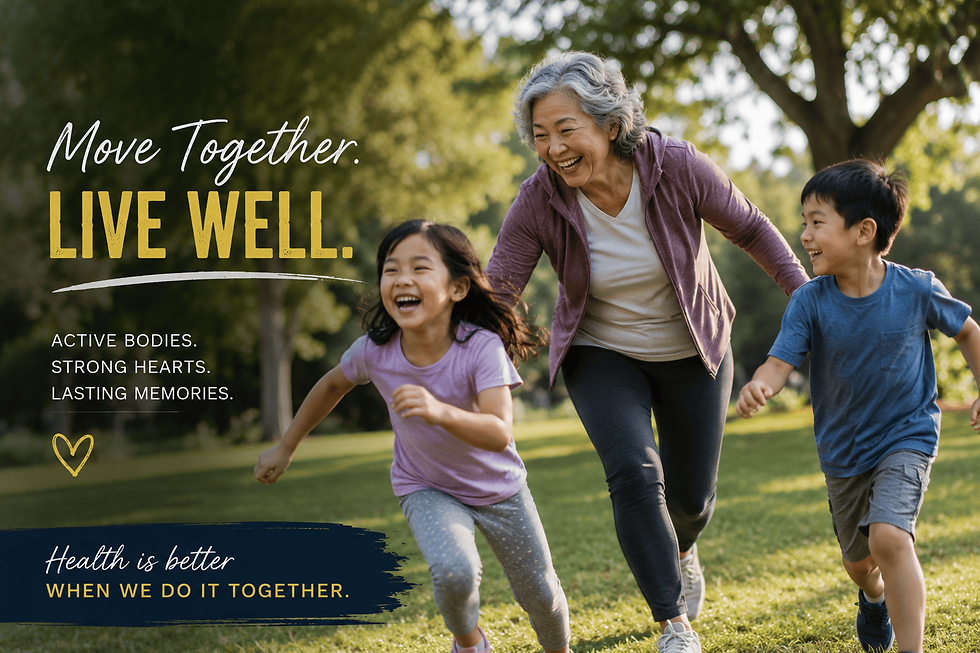
I feel this every time my grandkids visit. They wear me out in the best way possible. I am moving, bending, walking, lifting, and using parts of my body that do not get much action in everyday life. I may be tired at the end of the day, but I feel better.
And for them, it works in the opposite way too.
They play video games and do stationary activities during the week. When they are with family, they move. They run. They stretch. They burn energy they do not even realize they have stored up.
Family fun creates movement without calling it exercise.
That matters.
Movement Does Not Have to Look Like Exercise
One of the biggest barriers to physical health is mindset.
Exercise feels like work.
Movement feels like life.
Family fun invites movement naturally.
Walking to a festival.
Chasing kids at the park.
Dancing in the living room.
Playing games that require standing.
Cleaning together before heading out.
No one says, “Time to work out.”
They just move.
And the body responds.
Why Family Fun Improves Physical Health
Movement supports the body in simple but important ways.
It helps:
• Improve circulation
• Maintain flexibility
• Support balance
• Build endurance
• Reduce stiffness
• Strengthen muscles
• Improve sleep
When movement happens through fun, people are more likely to do it consistently.
Consistency matters more than intensity.
How Grandkids Keep Me Moving
I did not plan to use my body this much at this stage of life.
But grandchildren do not ask if your knees are ready.
They want to:
• Walk
• Explore
• Play
• Be chased
• Be lifted
• Be followed
I move because they move.
I bend down. I get back up. I walk farther than I normally would. I stay active longer because the activity has purpose.
That kind of movement is incredibly valuable for aging bodies.
Physical Health Benefits for Grandparents
For grandparents, family fun supports:
• Joint mobility
• Balance and coordination
• Muscle engagement
• Cardiovascular movement
• Reduced stiffness
• Mental alertness
Movement tied to joy feels motivating, not forced.
It helps maintain independence and confidence.
Physical Health Benefits for Kids
Children need movement just as much as they need connection.
Family fun helps kids:
• Burn excess energy
• Improve coordination
• Strengthen muscles
• Regulate emotions
• Improve focus
• Sleep better
Movement also helps kids manage stress and anxiety.
Running, climbing, dancing, and playing allow kids to release what builds up inside their bodies.
Stationary Play Has Its Place, But Movement Balances It
Video games, shows, and quiet activities are part of modern life.
They are not bad.
But they need balance.
Family fun that includes movement:
• Breaks up long periods of sitting
• Engages different muscle groups
• Supports healthy development
• Encourages active habits
When movement is part of family culture, kids grow up seeing it as normal.
Family Fun Encourages Healthy Habits Without Pressure
When families move together, healthy habits form naturally.
No lectures.
No guilt.
No pressure.
Kids learn:
• Movement feels good
• Being active is social
• Bodies are meant to move
• Activity does not have to be competitive
Adults learn:
• Movement can be enjoyable
• Activity fits into real life
• Health does not require perfection
These lessons last.
Cleaning Together Counts Too
People often overlook this part.
Cleaning together before going out is movement.
Carrying things.
Bending.
Reaching.
Walking.
It engages the body and teaches responsibility.
And when it is followed by fun, it feels purposeful instead of draining.
Walking Is One of the Most Underrated Family Activities
Walking does not require equipment or skill.
It works for:
• Kids
• Teens
• Adults
• Grandparents
Family walks:
• Improve cardiovascular health
• Support joint movement
• Encourage conversation
• Reduce stress
• Increase daily step count
Walking side by side creates connection while supporting physical health.
Dancing Is Exercise Disguised as Fun
Dance parties at home are powerful.
They:
• Increase heart rate
• Improve coordination
• Build strength
• Encourage expression
• Boost mood
No one worries about form or technique. They just move.
This is especially helpful for people who feel intimidated by traditional exercise.
Outdoor Family Fun Multiplies the Benefits
Outdoor family activities combine movement with nature.
• Beaches
• Lakes
• Parks
• Trails
• Festivals
Being outside adds:
• Vitamin D exposure
• Improved mood
• Stress reduction
• Sensory engagement
The body and mind both benefit.
Physical Health Improves Mental Health Too
Movement supports mental health.
It helps:
• Reduce anxiety
• Improve mood
• Increase energy
• Support emotional regulation
• Improve sleep
When families move together, everyone benefits emotionally and physically.
This is especially important during stressful seasons.
Modeling Movement for the Next Generation
Kids watch adults.
When they see parents and grandparents moving, they learn:
• Activity is normal
• Aging does not mean stopping
• Health is part of life, not a chore
This modeling shapes lifelong habits.
Family Fun Makes Movement Sustainable
The biggest reason people stop exercising is burnout.
Family fun avoids burnout because:
• It is social
• It is enjoyable
• It is flexible
• It fits real life
Sustainable movement is more important than perfect routines.
You Do Not Have to Be Fit to Start
Movement through family fun meets people where they are.
You do not need:
• Special clothes
• Gym memberships
• Training plans
You just need to show up.
Start slow.
Rest when needed.
Laugh often.
The body adapts.
It Is Never Too Late to Move More
Age does not disqualify you from movement.
Starting later still helps:
• Maintain mobility
• Reduce stiffness
• Improve balance
• Support heart health
• Increase confidence
Family fun provides motivation without pressure.
One Simple Way to Add Movement This Week
Pick one thing:
• A family walk
• A dance break
• An outdoor outing
• Active play with kids
• Cleaning together before fun
Put it on the calendar.
Movement grows when it is intentional.
What You Are Really Supporting
When families move together, they support:
• Physical health
• Mental health
• Emotional connection
• Lifelong habits
• Shared joy
That combination is powerful.
Continue the Conversation
If you are looking for ways to support physical health without making it feel like work, you are not alone.
Our community groups are spaces where families talk honestly about movement, health, aging, parenting, and building joy in real life.
You are welcome to join us. Movement is better together.
A supportive group space to connect with others navigating similar challenges and life transitions.
You are welcome to choose the support that fits your needs right now.
Your Story Matters
We need your nice comments below! Your thoughts, experiences, and lessons learned might be exactly what someone else needs to hear today.
Drop a comment, Say Hello, and join the conversation.
References and Further Reading
Centers for Disease Control and Prevention Article: Physical Activity and Healthhttps://www.cdc.gov/physicalactivity/basics/pa-health/index.htm
American Psychological Association Article: The Mental Health Benefits of Exercisehttps://www.apa.org/topics/exercise-fitness/stress
Harvard Health Publishing Article: Exercise and Physical Activity for Older Adultshttps://www.health.harvard.edu/staying-healthy/exercise-and-physical-activity-for-older-adults
National Institute on Aging Article: Physical Activity for Older Adultshttps://www.nia.nih.gov/health/physical-activity
About the Author:
Deborah Ann Martin is the founder of Surviving Life Lessons, a published author, poet, speaker, and trainer with over 20 years of management experience across multiple industries. An MBA graduate, U.S. veteran, single mother, and rare cancer survivor, Deborah brings both professional expertise and lived experience to her writing on resilience, leadership, personal growth, and overcoming adversity. Her mission is to empower others with practical wisdom and real-life insight to navigate life’s challenges with strength and purpose.
Need More Personalized Support?
Everyone's journey is unique. If you're looking for personalized guidance, encouragement, or one-on-one support, explore our services to find the option that's right for you. We're here to help you take your next step with confidence and hope.
Helpful Resources for Your Journey
Explore our collection of books, journals, coloring books, and printable PDFs designed to encourage, inspire, and support you every step of the way.


.png)
Comments