

Don’t Procrastinate

Updated: Sep 29

A Blog and Journal Series on Understanding Procrastination and Taking Back Control
Procrastination is one of the most common struggles in modern life.
It affects:
Your Work
Your health.
Your finances.
Your relationships.
Your home.
Your peace of mind.
And yet, most advice about procrastination focuses on discipline, productivity hacks, or stricter routines.
This series is different.
The Don’t Procrastinate blog and journal series is not about shaming you into action.
It is about understanding why you delay in the first place.
Because procrastination is rarely about laziness.
It is about:
Emotion.
Overwhelm.
Fear.
Burnout.
Perfectionism.
Avoidance that feels protective in the moment but costly in the long run.
When you understand the emotional roots of procrastination, you can respond with clarity instead of criticism.
That is where real change begins.
What This Don’t Procrastinate Series Is Really About
This series was created for people who:
• Feel stuck starting important tasks
• Delay responsibilities and then feel guilty
• Avoid difficult conversations
• Postpone health decisions
• Ignore financial stress
• Struggle with clutter and organization
• Feel burned out but still pressured to perform
Procrastination is not a personality flaw.
Research in behavioral psychology shows that procrastination is strongly connected to emotional regulation rather than time management alone. According to the American Psychological Association, procrastination is often linked to stress, anxiety, and fear of failure rather than laziness.
Similarly, experts at the Harvard Business Review note that procrastination is often a coping mechanism to avoid negative emotions associated with a task.
In other words, when you procrastinate, your brain is trying to protect you from discomfort.
The problem is that short-term emotional relief creates long-term stress.
This series helps you break that cycle.
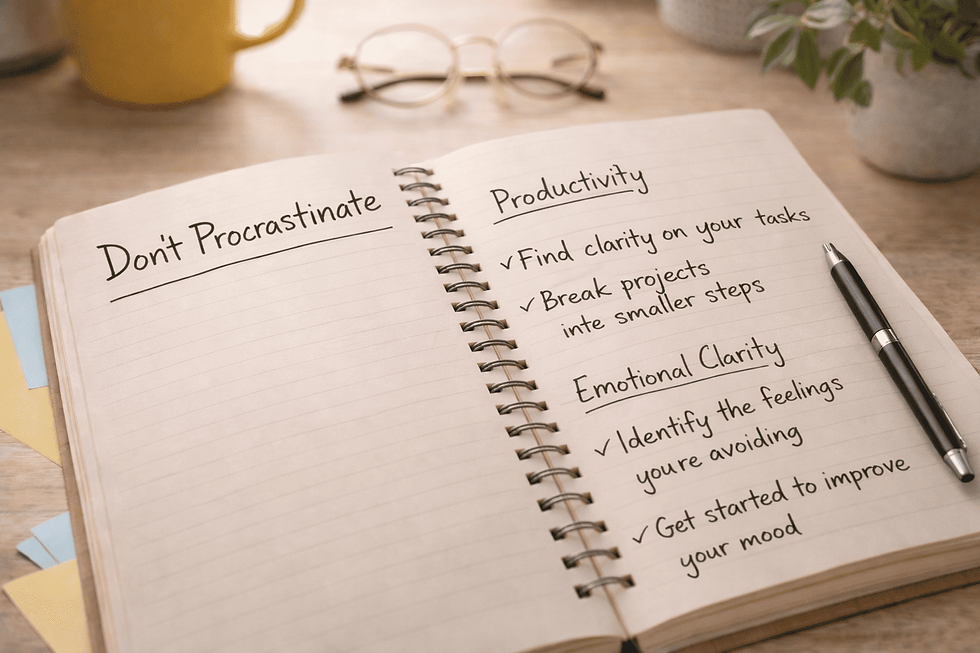
The Core Message of Don’t Procrastinate
You are not broken.
You are not incapable.
You are not lazy.
You are human.
Procrastination is information.
It tells you:
• Something feels overwhelming
• Something feels risky
• Something feels unclear
• Something feels emotionally heavy
Instead of attacking yourself, this series teaches you to:
• Get curious
• Identify emotional triggers
• Take small, manageable steps
• Replace shame with clarity
• Build compassionate accountability
This is sustainable productivity.
Not hustle culture.
Not burnout.
Not perfectionism.
But steady, human progress.
Inside the Don’t Procrastinate Blog Series
Each blog focuses on a specific area where procrastination commonly shows up in real life.
These are not abstract concepts.
They are practical, everyday struggles.
This foundational blog explores the emotional psychology of procrastination.
You will learn:
• Why tasks feel heavy
• How perfectionism fuels delay
• How fear disguises itself as avoidance
• How awareness weakens procrastination
Understanding is the first step toward change.
Many people delay doctor appointments, rest, exercise, and emotional care.
This blog explores:
• Why health avoidance often comes from fear
• How small self-care steps build confidence
• How delaying care increases stress
• Why health is not selfish but necessary
Your well-being deserves attention now.
Money stress grows when avoided.
This blog addresses:
• Fear around finances
• Avoiding bills and budgeting
• Shame tied to money
• Small financial actions that build stability
Financial clarity reduces anxiety.
Work procrastination is often tied to overwhelm and perfectionism.
This blog helps you:
• Break tasks into manageable pieces
• Reduce pressure
• Start without waiting for motivation
• Build sustainable productivity
Progress matters more than perfection.
Clutter affects mental clarity.
This blog explores:
• Emotional attachment to belongings
• Decision fatigue
• How small organization steps create calm
• Why the environment affects mood
Order creates breathing room.
Avoided conversations create distance.
This blog addresses:
• Fear of conflict
• Emotional vulnerability
• Setting boundaries
• Repairing relationships
Honest communication builds connection.
Sometimes procrastination is exhaustion in disguise.
This blog explores:
• Burnout
• Nervous system regulation
• Intentional rest
• Why recovery improves productivity
You cannot push through depletion.
You must recharge.
Why This Series Matters Now
We live in a culture that glorifies productivity but rarely teaches emotional regulation.
We are told to:
• Try harder
• Do more
• Wake up earlier
• Work longer
But if emotional overwhelm remains unaddressed, procrastination returns.
This series bridges productivity and psychology.
It acknowledges:
• You need structure
• You need clarity
• You also need compassion
Real growth happens when both are present.
Who This Series Is For
This series is for:
• Professionals overwhelmed by work
• Parents carrying invisible labor
• Creatives stuck in perfectionism
• Anyone struggling with follow-through
• Individuals are tired of feeling guilty for delaying
• People are ready to understand themselves better
You do not need to be perfect.
You need to be honest.
And willing to take one small step.
The Philosophy Behind Don’t Procrastinate
This series operates on three core principles:
1. Awareness Before Action
You cannot change what you do not understand.
2. Small Steps Over Force
Gentle action builds momentum.
3. Compassion With Accountability
You can be kind to yourself and still move forward.
Both can coexist.
Your Invitation
As you move through this series, ask yourself:
Where is procrastination costing me peace?
What is it protecting me from?
What small action can I take today?
You do not need to overhaul your life.
You need one honest decision.
Then another.
Then another.
Progress begins with awareness.
Continue the Journey
If procrastination feels deeply rooted, you do not have to navigate it alone.
Understanding yourself is a movement forward.
And movement, even small movement, is progress.
Where to Go From Here
Change touches your heart, your habits, and your relationships, so support should too. At Surviving Life Lessons, we believe in life survivors helping life strugglers. Our Motivation & Mindset group can help you keep moving forward, and our Self-Esteem & Confidence Support Group can help you rebuild how you see yourself. You can also browse our Community Groups Catalog to find every group that fits where you are right now.
Next, read Don’t Procrastinate: Understanding Why You Delay or Don't Procrastinate: Work, Productivity, and Project Procrastination. You can also work through it with the Don’t Procrastinate Guided Journal.
Your Story Matters
We need your nice comments below! Your thoughts, experiences, and lessons learned might be exactly what someone else needs to hear today.
Drop a comment, Say Hello, and join the conversation.
Need More Personalized Support?
Everyone's journey is unique. If you're looking for personalized guidance, encouragement, or one-on-one support, explore our services to find the option that's right for you. We're here to help you take your next step with confidence and hope.
Helpful Resources for Your Journey
Explore our collection of books, journals, coloring books, and printable PDFs designed to encourage, inspire, and support you every step of the way.
Companion journal for this series: Don’t Procrastinate Guided Journal | Printable PDF: Don’t Procrastinate (PDF)
References
American Psychological Association. “Why We Procrastinate.” https://www.apa.org
Harvard Business Review. “Why You Procrastinate (and How to Stop).” https://hbr.org
About the Author:
Deborah Ann Martin is the founder of Surviving Life Lessons, a published author, poet, speaker, and trainer with over 20 years of management experience across multiple industries. An MBA graduate, U.S. veteran, single mother, and rare cancer survivor, Deborah brings both professional expertise and lived experience to her writing on resilience, leadership, personal growth, and overcoming adversity. Her mission is to empower others with practical wisdom and real-life insight to navigate life’s challenges with strength and purpose.


.png)
Comments