

Eating for Your Body: Blood Sugar Spikes You Don’t Expect

Updated: Sep 28

When You’re Not Diabetic but Your Body Still Reacts
Most people think blood sugar problems only matter if you have diabetes.
I used to think that too.
Then I started paying attention to my bloodwork, my medications, my energy crashes, and eventually my continuous glucose monitor. What I learned is that blood sugar affects far more people than we realize, especially those dealing with illness, cancer history, chronic pain, inflammation, or long-term medications.
You can eat something that looks reasonable, even healthy, and still feel shaky, exhausted, foggy, or inflamed afterward.
That is not in your head.
This post is part of the Eating for Your Body series. It explains why blood sugar spikes can happen even when you are not diabetic, where hidden spikes come from, and how awareness, not a diet, helps protect your health.
Blood Sugar Spikes Are About More Than Diabetes
Blood sugar affects:
Energy levels
Brain fog
Mood
Inflammation
Hunger
Fat storage
Healing
Sleep
You do not need a diabetes diagnosis for blood sugar swings to affect your daily life.
Many people develop blood sugar instability long before anything shows up as diabetes on a chart.
Why Blood Sugar Changes After Illness or Treatment
After illness, cancer treatment, or long-term medication use, the body may process sugar differently.
Reasons include:
Hormonal changes
Reduced muscle mass
Chronic inflammation
Medication side effects
Reduced movement
Stress and trauma
Some cancer medications and hormone blockers raise blood sugar. Steroids and other medications can do the same.
I live with this reality. My medications affect my blood sugar even when my food choices have not changed. That means awareness matters more than willpower.
Foods That Commonly Cause Surprise Spikes
Some foods spike blood sugar faster than people expect.
Common examples:
White rice
Pasta
Bread
Crackers
Breakfast cereal
Granola
Fruit juice
Smoothies
Sauces and dressings
Restaurant meals
These foods are not bad. The issue is how quickly they digest, especially when eaten alone or in large portions.
The Restaurant Surprise
This lesson hit home for me when I first used a continuous glucose monitor.
I went to a Thai restaurant and ordered what I believed was a healthy meal. Vegetables. Protein. Nothing fried. It looked like a good choice.
Partway through the meal, my monitor went off.
The spike came from sugar hidden in the sauce.
That moment changed how I viewed eating out. It was not about blame. It was about realizing how much hidden sugar exists in restaurant food, even meals marketed as healthy.
Liquid Calories Hit Fast
Liquids digest quickly.
Juices, sweetened teas, smoothies, and specialty coffees often spike blood sugar faster than solid food because there is little fiber to slow absorption.
Even drinks labeled natural or healthy can cause quick rises.
This matters if you notice:
Energy crashes after drinks
Increased hunger shortly after
Shakiness
Brain fog
Portion Size Makes a Big Difference
Blood sugar is not just about what you eat. It is also about how much.
A serving size on a label may be:
3/4 cup of cereal
7 chips
Half a frozen meal
Most people eat more than that.
When portions increase, carbohydrates and sugars increase too, even if the food seems reasonable.
Being honest about portions helps prevent surprise spikes.
Fiber and Protein Slow the Spike
Fiber and protein help slow how fast sugar enters the bloodstream.
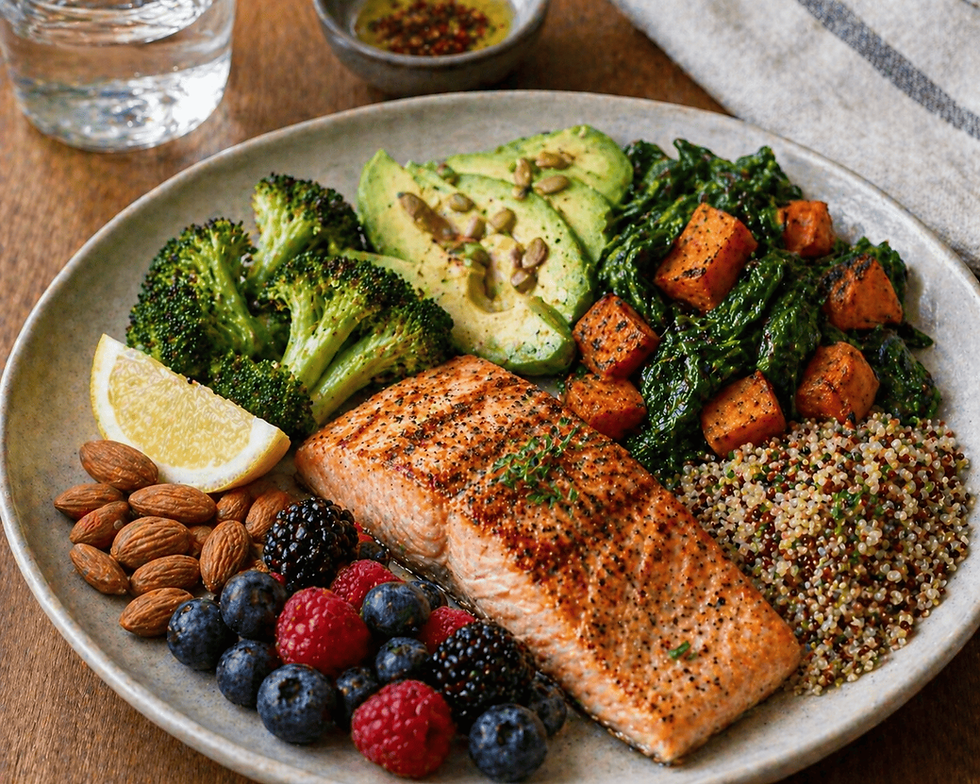
This is why meals that include:
Vegetables
Protein
Healthy fats
Often feel steadier than meals made mostly of refined carbohydrates.
You are not trying to eliminate carbs. You are trying to support balance.
Stress Raises Blood Sugar Too
Food is not the only factor.
Stress can raise blood sugar on its own.
Chronic stress:
Increases cortisol
Raises blood sugar
Worsens inflammation
Disrupts hunger cues
After illness, stress often stays elevated. That can make blood sugar harder to manage even when food choices are reasonable.
Reducing stress around food is part of blood sugar care.
Why A1C Matters Even If You’re “Healthy”
A1C measures average blood sugar over time.
It is often checked only when diabetes is suspected, but it can be useful as a baseline and trend for many people.
Rising A1C over time may signal:
Insulin resistance
Medication effects
Increased inflammation
Reduced activity tolerance
Catching trends early gives people more options.
Awareness Without Fear
This is important.
Blood sugar awareness is not about obsession. It is about understanding how your body responds.
Eating for your body means:
Noticing patterns
Reducing hidden sugars when possible
Pairing carbohydrates with protein or fiber
Adjusting portions
Being cautious with restaurant sauces and drinks
No diet required.
Why Whole Foods Help Blood Sugar Stability
Whole foods digest more slowly and predictably.
Cooking at home gives you:
Control over ingredients
Less hidden sugar
More consistent portions
That control reduces surprises, especially when medications already raise blood sugar.
You Are Not Doing It Wrong
If your blood sugar reacts more strongly than expected, you are not failing.
Your body may be responding to:
Medications
Inflammation
Stress
Reduced movement
Changes from illness
Information helps you adapt.
Eating for Your Body Is About Protection, Not Perfection
Blood sugar care is not about eliminating foods.
It is about:
Supporting steady energy
Reducing inflammation
Helping medications work better
Protecting long term health
Small adjustments matter more than extreme changes.
What Comes Next
Next in the Eating for Your Body series, we will build on this with:
This will connect pain, fatigue, appetite, and blood sugar in a realistic way.
You Deserve Clarity, Not Fear
You do not need to fear food. You do not need a diagnosis to pay attention. You do not need to follow a diet.
You need information that helps you work with your body.
Support matters.
Where to Go From Here
Unexpected blood sugar spikes can affect your energy, your mood, and your health. At Surviving Life Lessons, we believe in life survivors helping life strugglers. Our Diabetes & Lifestyle Support Group is a place to talk about managing blood sugar, and our Healthy Eating & Nutrition Support Group can help with simple meal ideas. You can also browse our Community Groups Catalog to find every group that fits where you are right now.
Next, read Eating for Your Body: Building a Plate That Supports Blood Sugar or Eating for Your Body: Meal Timing Matters.
Your Story Matters
We need your nice comments below! Your thoughts, experiences, and lessons learned might be exactly what someone else needs to hear today.
Drop a comment, Say Hello, and join the conversation.
Need More Personalized Support?
Everyone's journey is unique. If you're looking for personalized guidance, encouragement, or one-on-one support, explore our services to find the option that's right for you. We're here to help you take your next step with confidence and hope.
Helpful Resources for Your Journey
Explore our collection of books, journals, coloring books, and printable PDFs designed to encourage, inspire, and support you every step of the way.
References
American Diabetes Association. Blood Sugar Basics. diabetes.org
Mayo Clinic Staff. Blood Sugar and Insulin Resistance. mayoclinic.org
Cleveland Clinic. Hidden Sugars in Foods. clevelandclinic.org
Harvard T.H. Chan School of Public Health. Carbohydrates and Blood Sugar. hsph.harvard.edu
About the Author:
Deborah Ann Martin is the founder of Surviving Life Lessons, a published author, poet, speaker, and trainer with over 20 years of management experience across multiple industries. An MBA graduate, U.S. veteran, single mother, and rare cancer survivor, Deborah brings both professional expertise and lived experience to her writing on resilience, leadership, personal growth, and overcoming adversity. Her mission is to empower others with practical wisdom and real-life insight to navigate life’s challenges with strength and purpose.



.png)
Comments