

Avoiding Old Patterns After Gray Divorce: Control & Caretaking


Dating After My Divorce
Five years after my gray divorce at 49, I entered a new relationship. At first, it felt hopeful. There were shared dinners, laughter, and the comfort of companionship after years of tension. It felt like I was finally moving forward.
But slowly, something started to feel familiar.
Little things at first. Subtle expectations that I would handle most of the emotional work, plan things, and adjust more than I should. Over time, I began to feel like I was slipping back into a role I knew all too well.
I was no longer just a partner. I was becoming controlled again.
That realization was hard, but it was also clear.
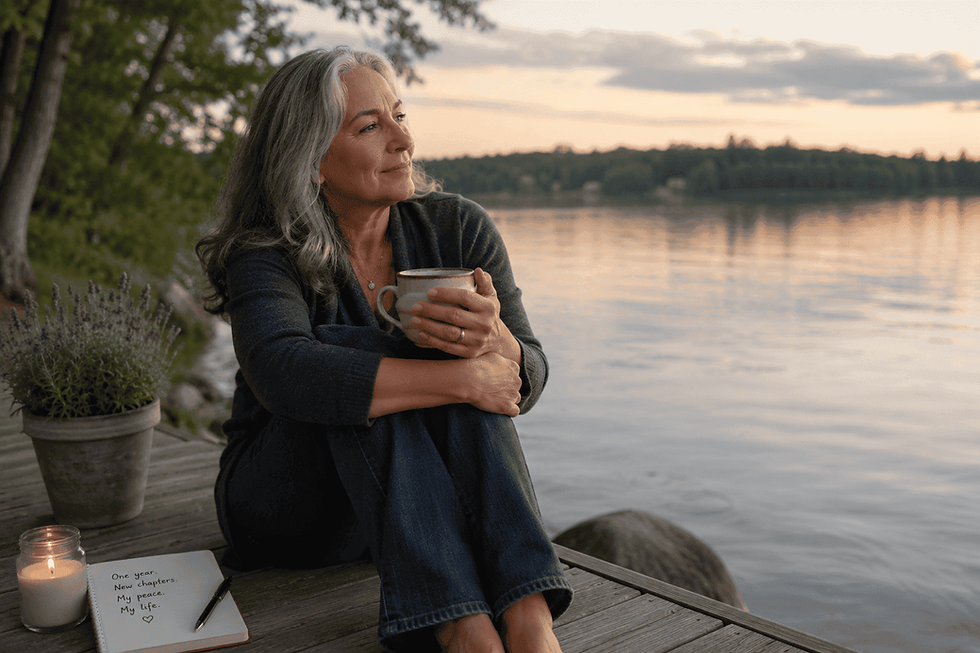
After three years, I ended the relationship. It came with sadness, but it also brought a level of relief I could not ignore. Today, I am intentionally single, traveling when I want, spending time how I choose, and living with a kind of peace I had not felt in decades.
I am still open to a relationship someday. But it will only be one built on real equality, not control or quiet sacrifice.
Why Old Patterns Come Back So Easily
One of the hardest truths after gray divorce is this.
Just because you leave a relationship does not mean you automatically leave the patterns behind.
When you have been in a long marriage, sometimes 20 or 30 years or more, those roles become part of how you function. You do not even think about them. They just feel normal.
So when you step into a new relationship, especially after loneliness or stress, those patterns can come back without you even realizing it. It feels familiar, and familiar can feel safe, even when it is not healthy.
That is how people end up asking the same question.
How did I end up here again?
Recognizing Control and Caretaking Early
The signs are not always obvious in the beginning. They often show up in small ways that are easy to explain away.
You may find yourself adjusting your schedule more than the other person does. You may notice that your preferences slowly get pushed aside in favor of what “makes more sense” for them. You may begin handling most of the planning, communication, and emotional support again.
It does not feel like control at first.
It feels like being helpful.
It feels like being understanding.
It feels like keeping the peace.
But over time, it starts to feel one-sided.
Common Red Flags: Control, Caretaking & Imbalance
Learning to spot these patterns early is one of the most valuable skills you can develop in your second act.
Here are some of the most common red flags reported by people over 50 after gray divorce:
Control Dynamics
Subtle decision-making dominance (“I know what’s best for us”)
Criticism of how you spend your time, money, or energy
Pressure to prioritize his schedule, preferences, or social circle over yours
Jealousy or discomfort with your independent activities, travel plans, or friendships
Unequal Caretaking & Emotional Labor
Expectation that you will manage most planning, communication, and emotional support
Frequent “helplessness” around household tasks or emotional regulation
Guilt-tripping when you set boundaries or prioritize your own needs
The relationship feeling more like parenting than partnering
Financial and Lifestyle Imbalance
Pressure to combine finances or living situations too quickly
Assumptions about your availability for caretaking (his health issues, family obligations, etc.)
Discomfort with your desire for financial independence or separate households
When a Relationship Stops Feeling Equal
There is a shift that happens when things are not balanced.
You begin to feel responsible for how the relationship functions. You carry the emotional weight. You make sure things stay connected, organized, and smooth.
Instead of feeling supported, you feel needed in a way that takes more than it gives.
That is when you need to pause.
Because a relationship should not feel like something you are managing alone.
What Equal Partnership Looks Like Now
At this stage in life, equal partnership looks different than it did when we were younger.
At this stage of life, equal partnership looks less like romantic idealism and more like mutual respect in daily reality.
Key characteristics include:
Shared decision-making with genuine consideration for both people’s preferences and autonomy
Balanced emotional labor, both partners actively contribute to planning, communication, and support
Respect for individual independence, time alone, friendships, travel, and personal interests are encouraged rather than resented
Financial transparency and fairness without pressure to merge everything
Emotional maturity, the ability to regulate one’s own emotions rather than expecting the partner to manage them
Willingness to adapt to each other’s established lives, adult children, and health realities
Equal partnership after 50 also respects that both people have decades of history. It honors the desire for companionship without demanding the self-sacrifice many experienced in their first marriage.
It is not about building from nothing.
It is about bringing two full lives together in a way that respects both people.
It means shared decision-making, not one person leading while the other adjusts.
It means both people are showing up emotionally, not one carrying the weight.
It also means respecting independence.
Time alone, friendships, travel, and personal space should not be a problem.
They should be supported.
Choosing Single Life With Intention
This is something I did not expect to feel as strongly as I do now.
Choosing to be single is not settling. It is not giving up.
It is choosing peace over repeating patterns that no longer serve you.
Single life allows you to:
Direct your time and energy without negotiation
Travel spontaneously or according to your own desires
Build friendships and community on your terms
Heal fully from old patterns before inviting anyone new into your space
Model healthy autonomy for your adult children and grandchildren
For those who spent years feeling like a servant rather than a partner, single life can feel like breathing freely for the first time in decades.
It does not close the door on future equal partnership, it simply protects your peace until (or unless) the right situation arises.
There is a freedom in deciding how you spend your time without having to negotiate every part of your life.
There is clarity in knowing you are not sacrificing yourself to keep something going.
For me, this season has been about enjoying life in a way I never had the chance to before.
That does not close the door on a future relationship. It just means I am protecting what I have built.
Cultural and Life Influences
Cultural background significantly influences how we perceive these patterns. In many collectivist cultures, women are expected to maintain family harmony even at personal cost.
Religious teachings may emphasize sacrifice or submission, making it harder to recognize imbalance as problematic.
Military family life often reinforces traditional gender roles due to deployment realities, making the transition to equal partnership more complex.
Awareness of these influences helps you make choices that honor your heritage without sacrificing your well-being. Many women successfully create new norm, respecting cultural values while insisting on mutual respect in any relationship.
Cultural norms and roles do not just disappear after divorce.
It takes awareness to recognize those patterns and decide what you are willing to carry forward and what you are ready to change.
Practical Strategies for Breaking Old Patterns
Develop clear internal standards - Write down your non-negotiables for any future relationship and review them regularly.
Practice boundary-setting early - Learn to say “no” kindly but firmly to requests that feel imbalanced.
Slow the pace - Give yourself time to observe patterns before deepening commitment or combining lives.
Maintain strong independence - Keep separate finances, living arrangements, and social circles initially.
Seek support - Work with a therapist experienced in gray divorce or relationship patterns to process old wounds.
Celebrate single freedom - Actively schedule travel, hobbies, and self-directed time so single life feels abundant rather than lacking.
Breaking the Pattern Moving Forward
The biggest shift comes from awareness.
When you start to recognize these patterns, you can begin to interrupt them.
You can slow things down instead of rushing into something that feels good in the moment.
You can ask yourself if something feels balanced or if it feels familiar in a way that may not be healthy.
You can choose differently.
That is where your power is.
Healing and Journaling Tool
Take some time to sit with your own patterns and be honest with yourself. Not to judge, but to understand.
Think about what roles you carried in your past relationship and how they made you feel over time. Notice if those same patterns have shown up again, even in small ways.
Ask yourself what an equal partnership would actually look like in your everyday life, not just in words. Picture how it would feel to be supported instead of responsible for everything.
Then consider what you want to protect moving forward. Your time, your peace, your independence, and your sense of self all matter.
What specific patterns of control or caretaking am I determined not to repeat?
What does “equal partnership” look like for me in concrete daily behaviors?
In what ways am I currently enjoying single life, and how can I protect that freedom?
How do my cultural or family expectations influence my tolerance for imbalance?
Write it out in your own words. That clarity will guide you more than anything else.
Takeaways
Avoiding old patterns after gray divorce takes awareness and honesty.
It is easy to fall back into roles that feel familiar, especially after years of living that way. But familiar does not always mean healthy.
Recognizing the signs of control, caretaking, and imbalance early gives you the chance to choose differently.
You do not have to repeat what you already lived through.
You can build something new, whether that is a healthier relationship or a peaceful life on your own terms.
And that is where real freedom begins.
Continue the Journey
Share anonymously in the comments: Have you noticed old patterns of control or caretaking reappearing in post-divorce relationships? How did you address them, or what helped you choose single life instead? Your experiences help others feel less alone.
Join one of our community groups where people understand what this feels like and can support you through it.
Sometimes just having someone who understands can make all the difference.
Your Story Matters
We need your nice comments below! Your thoughts, experiences, and lessons learned might be exactly what someone else needs to hear today.
Drop a comment, Say Hello, and join the conversation.
Need More Personalized Support?
Everyone's journey is unique. If you're looking for personalized guidance, encouragement, or one-on-one support, explore our services to find the option that's right for you. We're here to help you take your next step with confidence and hope.
Helpful Resources for Your Journey
Explore our collection of books, journals, coloring books, and printable PDFs designed to encourage, inspire, and support you every step of the way.
References
American Psychological Association: "Relationship patterns and emotional health", https://www.apa.org/topics/relationships
National Institute on Aging: "Healthy relationships and emotional well-being", https://www.nia.nih.gov/health/emotional-wellness
AARP: "Relationships and independence after 50", https://www.aarp.org/home-family/dating/
National Center for Family & Marriage Research reports on gender differences in post-divorce relationship outcomes.
Studies from the Journals of Gerontology and Family Relations on relational patterns and repartnering after gray divorce.
About the Author:
Deborah Ann Martin is the founder of Surviving Life Lessons, a published author, poet, speaker, and trainer with over 20 years of management experience across multiple industries. An MBA graduate, U.S. veteran, single mother, and rare cancer survivor, Deborah brings both professional expertise and lived experience to her writing on resilience, leadership, personal growth, and overcoming adversity. Her mission is to empower others with practical wisdom and real-life insight to navigate life’s challenges with strength and purpose.



.png)
Comments